Wednesday, April 14, 2021

Why is Urine Yellow?? Do You know

Why is Urine Yellow?? Do You know?

You may think “What does Urine have to do with food and traveling? Well, since traveling is not on the to-do list these days, I was talking quite a bit about food concerning our health. My whole family turned vegetarian about  6 – 7 weeks ago!

Being a chef by trade this conversion wasn’t exactly an easy process, however, after almost 2 months with no meat, I must admit, I do not miss it too much. The challenge arises when I go to the Supermarket walking by the meat department, I still do miss a good minced meat with mashed potatoes, or some of the Swiss cold cuts and or sausages,  but so far I behaved myself, and wasn’t accused of being a traitor by the family!

When you change your diet at the 0f 70, you wonder what that could mean for your body? So, one starts to Google a lot of information, in order to find out whether one misses something, or maybe overdoes certain things.

That is how I came across the Urine subject; as part of a healthy body, one must drink a lot of water. That is where the bladder comes in action!

I asked my family members if they had any idea why the Urine was yellow? None of them had an idea! Here is a simple explanation through a video and some pictures of how that system operates; and should also make you aware and appreciate of what an incredible invention of a machine, gadget or contraption, (or whatever you want to call it), God provided for us!

Our kidneys are important filters and produce around 1.5 to 2 liters of urine (Latin: urine) every day. This causes waste products and pollutants to be eliminated from the body. Ideally, it is light yellow and clear and consists of 95 percent water, as well as urea, salts, hormones, vitamins and colorants. The yellow color comes from bilirubin, a breakdown substance of hemoglobin (the pigment in the blood) in the gallbladder.


If you drink little, the urine becomes more concentrated and therefore dark yellow.

If you eat a lot of beetroot, for example, it can turn red.

Taking Vitamins (B2) in excess colors it bright yellow.


Diseases and pregnancies can be detected in the urine. Today this is done with laboratory techniques, and in the past it was also done through taste. If the urine tasted sugary / sweet, you were “diabetic” (diabetes).

An adult’s bladder can hold about 1 liter of urine, and at around 300 milliliters, you feel the urge to go to the toilet.


Sunday, April 11, 2021

Dominikanische Republik – Die schönsten Strände in der Karibik


Dominikanische Republik – Die schönsten Strände in der Karibik

Puerto Plata Flüge aus Europa

Für Direktflüge zum Flughafen Puerto Plata aus Europa haben Sie hauptsächlich Optionen aus Deutschland, Belgien und Holland.
– TUIfly hat Charterflüge aus mehreren Städten in Deutschland, darunter Frankfurt und Köln / Bonn. Die meisten Flüge finden in der Sommersaison statt.
– Condor fliegt von Frankfurt nach Puerto Plata.

Sie können sich auch bei Air Beling, Eurowings, Finnari, ThomsonFly und XL Airways erkundigen. Sie fliegen von Zielen in Europa nach Puerto Plata, sind jedoch nur auf bestimmte Jahreszeiten beschränkt.

Eine gute Option aus Europa ist es, nach Miami oder Newark (New York) zu fliegen. Beide sind gut mit Puerto Plata verbunden, dies könnte jedoch für die meisten EU-Bürger einen «Visa Waiver» erfordern.
Santo Domingo Flüge aus Europa
Wenn Sie nach Santo Domingo fliegen, haben Sie mehr Möglichkeiten aus Europa.

– Madrid hat gute Verbindungen Santo Domingo. Die spanische Fluggesellschaft Iberia verfügt über Direktflüge sowie Air Europa. Vor kurzem startete die spanische Fluggesellschaft Plus Ultra regelmäßige Flüge nach Lateinamerika mit Anschlussflügen zwischen Madrid und Santo Domingo.

– Brügge-Ostende (Belgien) bietet Flüge nach Santo Domingo mit JetAirfly an, diese hängen jedoch von der Jahreszeit ab.


Please enter your email, so we can follow up with you.
Please follow and like us:
error
fb-share-icon
Tweet
fb-share-icon
Follow Ulrich Koepf:

Hospitality Professional

Leave a Reply 

Logged in as Ulrich KoepfLog out?


This site uses Akismet to reduce spam. Learn how your comment data is processed.


Saturday, April 3, 2021

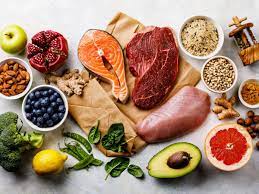
Not all Calories are Created Equal

Too much Protein in the long run is not good

Why our beer bellies are made of fat, not protein, and how much protein it really takes to get one.

The human being is genetically programmed to use as little energy as possible and to store a lot of energy for bad times by means of body storage. This programming worked excellently in earlier times, our species was able to successfully assert itself against external influences.

Proteins are also Calories

Today, however, the situation is a little different. In a very short time, a food shortage in the industrial nations has turned into an excess of readily available energy.
The people who live in certain countries not only have enough to eat, they have too much.
Social diseases such as diabetes, obesity, and high blood pressure result from this. Regardless of the time of day you eat your calories, if the energy is not used up, the body stores them, first in the liver and, when its capacity has been reached, in the fat pads around our belly. The body works a little differently when processing proteins or amino acids. These are stored in the body primarily in the form of muscles. However, this storage requires a further growth stimulus. In combination with targeted training, the amino acids are mainly stored in the form of muscle mass. The result is an increase in muscle mass and muscle strength.

Much Protein can be too much as well

But what happens to excess of protein? Contrary to popular belief, when it comes to proteins, more is not necessarily better, because the growth stimulus no longer increases due to additional protein from a certain amount. So the excess is not stored in the muscles. Instead, it is indirectly converted into fat and stored or excreted via other metabolic pathways. An overabundance of proteins not only harms the muscle structure but also leads to fat build-up or can damage the kidneys if there is insufficient water consumption.
Now the question arises, what is the optimal, ideal amount of protein intake? In a nutshell, the ideal amount would is around 20 grams of protein every three to four hours. Ideally, it should be scheduled so that one of these protein meals comes right after a workout. The fact that this amount is sufficiently covered by 100 grams of chicken or 60 grams of soy, for example, will probably surprise a few of you. Big meat smorgasbords are therefore of little use in terms of training progress.


Switzerland and it’s Chocolates!