Tuesday, April 21, 2020

Coffee’s Health Claims Debated in C.1000

Coffee Fortifies The Members, Leans The Skin, Dries Up The Humidities, And Gives an Excellent Smell To All The Body!

Ibn Sina – Physician – Philosopher c. 1000

 Coffee’s Health Claims Debated

Middle East, C. 1000

Coffee drinking is becoming more widespread in the Arab world. Persian physician Ibn Sina (Avicenna) has advocated the use of the beverage because of its medicinal qualities. Coffee is believed to invigorate the spirit and helps to ward off sleepiness.

Islamic theologians scholars and scientists have been debating whether this is, in fact, a good thing, or whether coffee is a harmful substance.

Islamic theologians are also divided on the merits of the drink. While many agree that it is a good substitute for alcohol, the use of which is forbidden by the Qu’ranothers feel that its use is not religiously appropriate. Coffee is sometimes referred to as “gahwa,” which means “prevents sleep,” and many religious men have seen the advantages of its use in staying awake for prayer and meditation.

Yet while the debate is raging, ordinary people are enjoying the taste of the beverage, some sweetening its bitterness with honey or sugar according to their taste. Coffee is often said to have been accidentally discovered when a Shepard noticed that a flock became hyperactive when they ate certain berries. Yet coffee beans are believed to have been cultivated for hundreds of years, and there is a reference in Holmer’s Odyssey to an unusual beverage, which many believe is a reference to buchum, or coffee. However, it is only now that it is beginning to gain wider popularity.

Trades first brought coffee beans from Africa and grew the plant for its berries. When mature, the berries are boiled and the resulting beverage is not only delicious but an effective stimulant.

and so it happened, they say!


New Cocoa Powder Process

New Cocoa Powder Process

Amsterdam , Netherlands, 1828

The Mayan civilization cultivated it in the Yucatan peninsula as early as 600 CE. and drank it with chili. Hernandez Cortezintroduced it to Spain in 1528, and for almost 100 years Spain guarded it as a secret. It has been used as a currency, as precious as gold, and though in France many people considered it a “barbarous product and noxious drug.” there were others who considered it an aphrodisiac.

What is it? It’s cacao- and its beans are roasted and ground to produce cacao powder.

Cacao trees are native to tropical America. The French, Dutch, and English all cultivate it in their colonies, and so cacao has started to reach a wider audience, though it has so far been relatively expensive to produce.

That is, until this year. Dutch chemist Coenraad van Houten has invented an effective method of extracting the cocoa oil and leaving a cake to be ground into powder. His innovative and inexpensive process uses a hydraulic press to extract much of the cocoa butter from the center of the bean. The residue is then mixed together with alkaline salts, which ensure that the cocoa powder can be easily mixed with water or milk. (The alkali neutralizes the acidic chocolate.) This new process is being called dutching or Dutch processing.

No longer reserved for the aristocracy and the upper classes, cocoa powder is now set to become a firm favorite with people everywhere.


Thursday, April 16, 2020

A New Breakfast Breakthrough – Did you know?


A New Breakfast Breakthrough

USA, May 1, 1941

CheeriOats, a new oat-based breakfast cereal that is ready to eat without cooking has been introduced to consumers. Manufactured and marketed by General Mills Inc., the oatmeal, rye, and corn cereal shaped into “little doughnuts” is sold using the slogan “The breakfast food you’ve always wanted!”

General Mills Inc. was formed in 1928 through a merger of several of the leading milling firms in the United States. After the merger, General Mills Inc. was the largest flour miller in the world, controlling 27 different milling companies.

When cereal was first developed, it made up of single flat flakes. In 1937 General Mills Inc. invented the “puffing gun,” which heats grains such as rice until they puff up into crunchy little balls. The first puffed cereal available was “Kix.”

And so it is!


Damp Caves Giving Birth to a New Style of Cheese – Did You know?


Damp Caves Giving Birth to a New Style of Cheese

Roquefort-sur-Soulzon, France, 1411

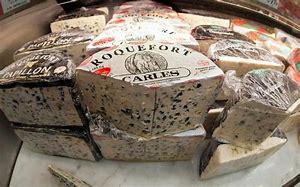
The residents of the town of Roquefort-sur-Soulzon are sporting cheesy grins today. King Charles VI has given them exclusive rights to produce their famous smelly cheese. In.  an effort to stamp out inferior imitations of the cheese, genuine Roquefort now can only be produced at Roquefort-dur-Soulzon, being aged in the nearby caves that produce the particular mold that is responsible for this unique cheese.

A similar style of cheese has been in existence since Roman times. Mention of it can even be found in the writings of the great Roman historian Pliny. The cheese was a particular favorite of the emperor Charlemagne, and a captivating legend surrounds its discovery.

The story says that a local shepherd once thought he saw a beautiful woman in the distance and left his sheep to pursue her. He also left his lunch of rye bread and cheese in one of the dark caves of the Grotte du Combalou. When he returned some weeks later, sadly without the young woman, the air currents in the cave, combined with the dampness of the rocks, had caused an odd blue mold to grow in streaks along the surface of the ewe’s milk cheese. The shepherd ran down to the village shouting: “It’s a miracle, it’s a miracle.” The people of the town gathered around him, tasted his cheese, and like it.

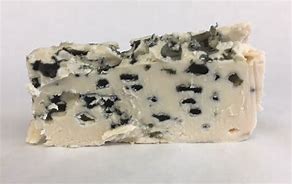
Ever since then the limestone caves of Mount Combalou near Roquefort-sur-Soulzon have been used for the production of this famous blue cheese. The cheesemakers still use milk from ewes that graze on the Aveyron Plateau. The cheese is white, crumbly, and slightly moist, with the distinctive veins of blue mold that produce a sharp tang. It has no rind, and the exterior of the cheese is edible and slightly salty.

Next time you enjoy a piece of that cheese, remember where it came from¨Bon Appetite!


“FRENCH COOKING’S ALL VERY WELL, BUT THEY CAN’T DO A DECENT ENGLISH BREAKFAST.”

Prince Philip, England


Christopher Columbus's Strange Fruit - Did You know?


Christopher Columbus's Strange Fruit

Spain, 1496

The Spanish court is buzzing with excitement at their first taste of a succulent new fruit brought back to Europe by Christopher Columbus after his second voyage to the New World.

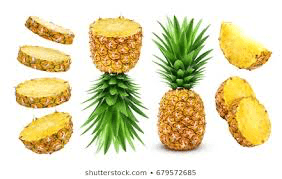
This exotic fruit has become known as a "pineapple" because it looks just like a large pinecone. It is native to southern Brazil and Paraguay where it was spread by the Indians northward through South and Central America to the West Indies. Columbus discovered the fruit when he lowered anchor in a  cove off the lush volcanic island of Guadeloupe in 1493, and rowed ashore to inspect a deserted Carib village, where he found cultivated plants bearing fruit.

The pineapple has become a "Regal" fruit, an item of celebrity and curiosity for royal gourmets and horticulturalists alike.

and so it happened!


Wednesday, April 15, 2020

New “Hamburger” Snack is Being Created – Did You know!


New “Hamburger” Snack is Being Created

New Haven, Connecticut, USA, December 1900

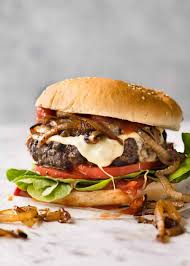
A small lunch wagon that sells steak sandwiches to local factory workers in tiny New Haven, Connecticut, has served what they are calling a “hamburger,” which was hastily made for a man who dashed off the street asking for a quick meal that he could eat on the run.

According to the diner’s owner, the “snack” consisted of a hurriedly broiled beef patty thrown between two slices of bread. “i don’t like to waste the excess beef from the daily lunch rush, so I ground it up, grilled it, and served it in a sandwich..”

The chef preferred not to be identified. And so it is!


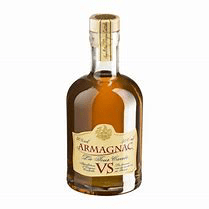
The Worlds First Brandy Distilled – Did You know?

The Worlds First Brandy Distilled

Armagnac, France, 1411 

A new style of drink is being sold commercially throughout southwestern France. Called Armagnac brandy, it has been successfully distilled and produced in the town of Armagnac, located in the province of Gascony, at the foothills of the Pyrénées.

Not only is Armagnac an invigorating beverage, but it also can be used to revive the spirits of those suffering from shock and as an antidote during epidemics.

The primary grapes used in the production of Armagnac brandy are Ugni Blanc, Folle Blanche, and Colombard.

Conclusion: Drink the hell out of Armagnac during this Pandemic period! LOL

Switzerland and it’s Chocolates!