Thursday, May 14, 2020

Where to Spent your Next Tremendous Vacation!

Where to Spent your Next Tremendous Vacation!

 Where to Spent your Next Tremendous Vacation!

As everyone is anxious to get out of the house, the neighborhood, the state or even the country, after being confined for weeks in the apartment or house, there is going to be a run on travel and tour agencies all over the globe! If you are planning on leaving your country that probably won’t be possible until sometimes in June or July. Then you have to ask yourself, is it going to be safe in whatever country you are planning on vising? how about the flight itself, circulating re-cycled air on the plane! that tiny Loo cubicle? is the airline food going to be safe? what if there is another outbreak while you are abroad? getting stuck in another country or on a cruise ship?! All these questions lingering in the air!

How about spending your vacation in your own country? I am sure that you haven’t seen many parts of your own country yet, I lived abroad for many years and returned to my native country a few years ago, I cannot believe what I have missed during the time I grew up and lived in my country until I came back a few years ago, the beauty of this place, some of the most awesome spots in every corner of the country that I visited since  I am back are just unbelievable.

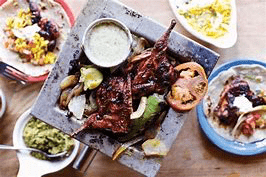
During the years I lived in North America, I traveled twice through 13 US states by car and I experienced some of the most incredible places in that country, every state has its own characteristics and identity, my favorite states are Utah with its red, clay-colored landscape and New Mexico with its rolling hills, lush green hillsides, that state has a lot to over, mountains, desert, lush green hills and forests, the history of the Native Americans, the Navajos and Apaches, and of course the unbelievable, and exciting Tex-Mex food! I fell in love with that state, it didn’t decide to retire in my native country I would have retired in New Mexico!

Now that I live in one of the most beautiful places in Europe, I am enjoying as many corners of this place as I can.

Think about planning your next tremendous vacation in your own country’s backyard, see what you have missed, you will be amazed by what you haven’t experienced yet!

Weird Restaurant Scene Booming in Kaifeng, China

Weird Restaurant Scene Booming in Kaifeng, China


Restaurant Scene Booming in Kaifeng

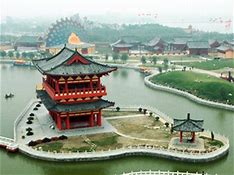
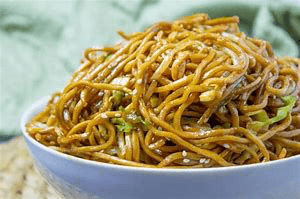
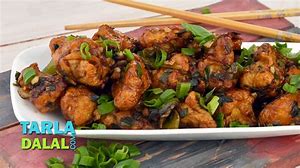
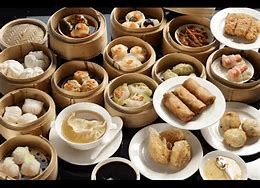
Kaifeng, China, 1147, offering sumptuous banquets. from the varied and the delicious cuisines of China’s different regions. Hundreds of small inns, teahouses, boodle shops, and dumpling houses also thrive night and day in this bustling cosmopolitan center. Bureaucrat and roving critic Meng Yuanlao reports that service standards are high in the best restaurants, with even the slightest slip in etiquette reported back to the restauranteur, who is obligated to dock the waiter’s salary- or even dismiss him for more severe breaches of etiquette. in his journals. the critic comments on all aspects of the Kaifeng restaurant scene.

For southern Chinese specialties, Meng Yuanlao recommends a walk down  Small Sweetwater Alley, while the famed night market is the place for a plate of tripe with blood pasta or chicken tongue soup.

An upcoming new trend is also monkey brains, some restaurants are offering this specialty for special guests.

Merchants and visiting officials have driven the gastronomy boom in Kaifeng in their eagerness to sample dishes perfected in earlier dynasties and in other regions. The Song Dynasty has its own sought-after delicacies, including fried purple crisp pork, sea cucumber shaped like lotus flowers, peony and swallow vegetables, hand-stretched noodles, and goose pears. Vegetables, herbs, and spices such as eggplant and spinach, nutmeg and saffron brought in by traders on the Silk Road bring new flavors and textures to many of the dishes.

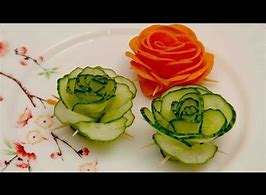
Great attention is paid to cooking methods and the beautiful presentation of each dish.

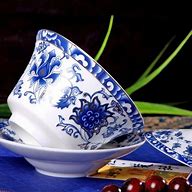
As much as the restaurants flourish in Kaifeng’s bustling streets. Government officials have been known to sit for hours discussing the different brands of tea; the idle rich and those of an artistic temperament will pay a fortune for a perfectly glazed blue and white teacup.

.


Sunday, April 26, 2020

The Taste of America

The Taste of America

USA, December 1969

In the 1960s the American family likes to eat out, and its favorite is the ever-reliable restaurant chain Howard Johnson’s, with its big steaks and fries, cozy booths, warm atmosphere, and attentive staff.

Japanese steakhouses are attracting good customs on the West Coast. Wendy’s, a new fast-food chain specializing in hamburgers, has been doing good business.

At home, the stodgy pot roasts, fried chicken, and casseroles of the 1950s are on the way out, and people are experimenting with the pastry crusted BeefWellington and the thinly sliced, heavily sauced Steak Diane, flamed in the frying pan with a dash of brandy. Chicken Kiev (fried chicken breast filled with herbed butter) is a Saturday night treat, and people are gathering around the fondue pot to try this Swiss-inspired way of eating. The idea is to melt a mixture of 3 cheeses in the pot, and then to dip morsels of crusty bread, chicken, lamb, mushrooms, potato, etc. on skewers into the hot cheese! Another new idea is the smorgasbord, a tradition from Sweden, where all manner of cold meats, seafood, salads, and so on ae assembled on the sideboard, with the guests helping themselves and bringing their (usually heavily laden) plate to the table.

The New York Times Menu Cook Book suggests the following. For a small cocktail party, try Camembert amandine, cucumber spread, crackers and toast rounds, mushrooms strudels, cocktail croquettes. For a larger cocktail party, serve buttered nuts, chicken liver paté, mushroom-stuffed eggs, tuna-stuffed eggs, toast rounds and crackers, wild rice pancakes, cream cheese pastry turnovers.

New on today’s supermarket shelves are Coffee-Mate, Life cereal, Sprite, Po Tarts, Shake n’Bake, Doritos, Bac*Os, instant porridge, Gatorade, Pringles, and Tang, among many others.

and so it was, some of you remember!

Meat’s Back on the Menu

Meat’s Back on the Menu

London , England, July 4, 1954

Several unusual things happened today: Smithfield Market opened for business at midnight, rather than 6.00 a.m. the London Housewives’ Association could be seen in Trafalgar Square conducting some sort of arcane ritual, and Geoffrey Lloyd, the Minister for Fuel and Power, set fire to an oversized model of a ration book.

On such a day, however, a little self-indulgence seems appropriate as British households are released today from 14 years of careful husbandry and self-restraint. Yes, rationing is officially at an end, with all remaining restrictions lifted on the sale and purchase of meat.

During the course of the war many types of food were rationed, essential, and unessential, as well as petrol, clothing, soap, and furniture. The system was introduced owing to the difficulties of importing goods in a wartime environment, and to try and ensure fair distribution. The rationing era also developed a memorable, if not always enjoyable, culture of its own, with coupons, private bartering, lengthy and tiresome queues, a black market, and a number of explanatory characters such as <potato <pete and Doctor carrot. Restrictions were not eased until 1948 and the process of de-rationing has been a very gradual but very welcome one.

and so it is, they say!!

Please follow and like us:

English Tastes Warm to Tomatoes

English tastes Warm to Tomatoes

England, 1595

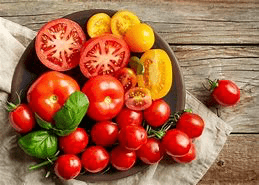
The Tomato, a fruit regarded with suspicion until recently in England, is finally making its way from the ornamental garden to the dining table.

A Plant native to the coastal highlands of western South America, the tomato first emigrated first to Central America and then to Mexico, where the indigenous peoples first crossbred and cultivated them, naming them tomatl.

Imported to Europe from the New World by Spanish conquistadores early this century, the tomato initially suffered from mistaken identity. European botanists it as a member of the Solanaceae family, whose only local relatives are the deliriants, mandrake, and deadly nightshade, leading to the inference that the fruit of the tomato must also be poisonous.


In fact, the Solanaceae family also includes such useful and decorative plants as tobacco, chili, sweet pepper, eggplant, potato, and petunia – all previously unknown in Europe but now achieving widespread use.

In his 1544 book, Italian herbalist Matthiolus documents the existence of tomatoes in local gardens and reports that Italians ate them. It will be interesting to see how they are used in Italian cuisine. The popular English herbalist John Gerard wrote that, while Spaniards and Italians ate tomatoes, the plant was nevertheless “of rank and stinking savour.” It has already achieved a variety of nicknames. The Dutch botanist Dodoens labeled it “an amorous apple,” observing that tomatoes “be of two sorts, one red and the other yellow, but in all other poyntes they be lyke.”

In Italy, it is called “Moor’s apple,” pomo dei mori, and another name with a similar sound, poma amoris, or “love apple.” The French use the same term, pomme d’amour.  The English call it “stinking golden apple,” and routinely throw it at mediocre actors and other performers as a sign of displeasure.


HostGator Web Hosting


Bread Standardized in England

England, 1266

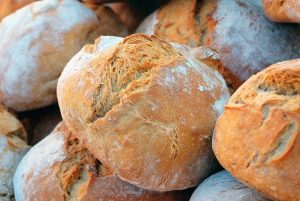
The size, weight, and more importantly, the price, of bread, is to become standardized. In a decree called the Assize of Bread and AleKing Henry III has requested uniformity in the production of this staple food to avoid major price variations and to weed out any dishonest pricing practices.

The Assize was enacted in response to the perceived shortage of grain and wheat. Because farmers only grow wheat in small quantities, prices vary each season. Although there have been cases of unprincipled bakers overcharging for bread in lean times, there have also been some cases where bakers have been mobbed by angry people who believe that bread is being kept from the population.


The Assize of Bread and Ale is designed to regulate the industry, providing not only bread but fair prices too. Bakers who sell underweight loaves will now be subject to fines or other punishments. Some bakers are now selling 13 loaves at a time to make sure that the total weight complies with the regulations.

and so it was, they say!!!😀


Tuesday, April 21, 2020

Coffee’s Health Claims Debated in C.1000

Coffee Fortifies The Members, Leans The Skin, Dries Up The Humidities, And Gives an Excellent Smell To All The Body!

Ibn Sina – Physician – Philosopher c. 1000

 Coffee’s Health Claims Debated

Middle East, C. 1000

Coffee drinking is becoming more widespread in the Arab world. Persian physician Ibn Sina (Avicenna) has advocated the use of the beverage because of its medicinal qualities. Coffee is believed to invigorate the spirit and helps to ward off sleepiness.

Islamic theologians scholars and scientists have been debating whether this is, in fact, a good thing, or whether coffee is a harmful substance.

Islamic theologians are also divided on the merits of the drink. While many agree that it is a good substitute for alcohol, the use of which is forbidden by the Qu’ranothers feel that its use is not religiously appropriate. Coffee is sometimes referred to as “gahwa,” which means “prevents sleep,” and many religious men have seen the advantages of its use in staying awake for prayer and meditation.

Yet while the debate is raging, ordinary people are enjoying the taste of the beverage, some sweetening its bitterness with honey or sugar according to their taste. Coffee is often said to have been accidentally discovered when a Shepard noticed that a flock became hyperactive when they ate certain berries. Yet coffee beans are believed to have been cultivated for hundreds of years, and there is a reference in Holmer’s Odyssey to an unusual beverage, which many believe is a reference to buchum, or coffee. However, it is only now that it is beginning to gain wider popularity.

Trades first brought coffee beans from Africa and grew the plant for its berries. When mature, the berries are boiled and the resulting beverage is not only delicious but an effective stimulant.

and so it happened, they say!


Switzerland and it’s Chocolates!